Fa

Pars Binalood Industrial-Commercial Group
An overview of the benefits of flaking corn kernels
(corn steam flaking)
A- review of technical benefits
For a long time in our country, methods have been used to increase the qualitative value (up grading) of cereal grains, especially barley and corn, the simplest and most familiar of which is the use of a mill to crush the grains. Perhaps the first system of flaking grain grains (barley only) through a roller can be found in the arrangement of the machinery of the animal feed factory affiliated to Ziyaran meat complex, which was brought by the Americans, but due to the lack of sufficient understanding of the working nature of the machine and also its effectiveness. which used to feed fattening animals, was left abandoned and out of line. Flaking is a process during which the grain thickness is reduced and its surface is increased. This problem causes the contact surface of the grain with digestive enzymes to increase and, accordingly, its digestibility increases. Due to the presence of steam in the system, the grains are softened and the amount of flouring in the subsequent processes, especially in the feeding system with completely mixed rations (TMR), is as low as possible. The result is that the grain dust has disappeared, the metabolic disorders resulting from the early decomposition of the crushed cereal grains have been removed, and the digestion in the digestive system (in the rumen) of the ruminant animal occurs slowly and slowly. The result of this is to prevent crop loss and increase feed conversion efficiency
It will be for livestock products, including milk and meat, etc. in the flake method under high pressure
Pressure cooking system is used with wet steam. The pressure on the cereal grain is about 3 to 4
Kilogram per square centimeter for 3 minutes. The thinner the flake is, the better it will be used for livestock. The grain flaking system by steam reduces or completely stops the product loss. In the hammer or roller mill, our grain loss is between one and two percent, but in the flake system with steam, there is no loss during processing, but an increase in the weight of the flaked grain has been reported up to two percent. The energy value of grain in the flaking method combined with steam is higher compared to other processing methods of grain grains. The highest goal of using this method is to increase the availability of starch during digestion in the digestive system of livestock and to increase efficiency in livestock production. The main reason is that the starch of the steamed flake seed has turned into a gelatinous state and compared to ground semolina grain, it is more available to ruminant ruminal microorganisms and the influx of enzymes to break down the starch in this type of flake is more intense. he does. Cereal starch consumption increases significantly with the way the grain is processed. The amount of this increase is related to the type of ruminant, the type of grain and the processing method. The improvement of the quality of cereal grains, which are usually used in feeding ruminants, when they undergo proper processing, is most effective in sorghum and corn, followed by barley. In this sense, the improvement of grain quality Today, corn, which is one of the main components of feeding ruminant animals and especially high-yielding dairy cows, is very important.
A reference to barley's steamed flake
One of the advantages of this system is to increase the enzymatic attack of barley when it is flaked by steam, and performing this operation changes the structure of starch granules in order to increase the quality value of starch contained in barley.
In feeding male calves with steamed barley flakes compared to when dry rolled oats were used
It was observed that the amount of daily weight gain as well as the amount of feed consumption in the group using steamed barley flakes was significantly increased.
A reference to steamed corn flakes
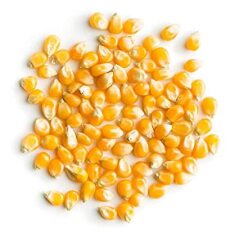
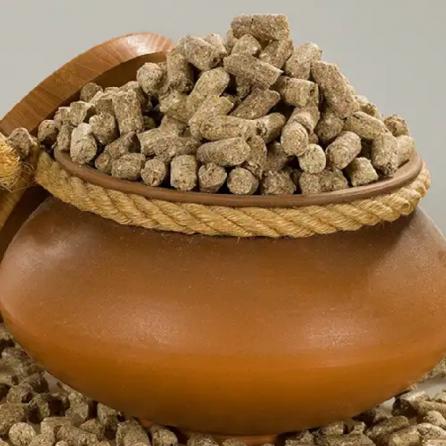
In general, the flaking of corn grain by steam increases the grain volume by 18%. Because this processing increases the microbial decomposition of starch in the rumen and reduces the amount of starch digestion in the next parts
The digestive tube (after the rumen) becomes, the importance of flaking the corn seed can be clearly seen. Because the rate of amylolytic decomposition of starch by the microbial enzymes of the rumen as well as the enzyme sources of the pancreas increases significantly in this method by using moisture, heat and pressure. Digestion tests performed on live animals (in situ) and in the laboratory (in vitro) show that the most fermentation of starch
In the digestive system, it was done by flaking the corn grains with steam and it was related to the change in the structure of the starch granules inside these grains. In this case, the size of these granules is smaller
has made it easier to break down starch. One of the problems in the process of producing flakes from corn kernels is related to the structure of the protein and the structure of the amylose and amylopectin branches of its starch, which during the change of its nature due to heat, it is completely "gelatinized" and on the rollers in a short period of time as a A sticky layer is placed.This layer prevents the machine from continuing to work. Nothing like this has happened in barley, or at least it will not happen to this extent. The second case also refers to the moisture content of the grain, both barley and corn, after flaking with steam
Usually, this humidity is high and it makes it impossible to store the grain even for a few days. Therefore, the flaking of the corn grain has a special complexity and delicacy due to which only a few producing countries have been able to
achieve this technology.
The effect of flaking of cereal grains on the amount of water absorption
Oats and flaked corn can be separated from the concentrate produced in the animal feed factory and fed directly to the animal in feeding livestock, especially high-yielding dairy cows. Regardless of the savings in concentrate production and the absence of these raw materials in animal feed factories. And as a result of reducing the production costs of the concentrate, these materials can be consumed directly together with other food materials in the animal's daily diet as a total mixed ration (TMR). Meanwhile, the rate of water absorption of flaked seeds increases the amount of water or other watery feeds that are added to complete feed (TMR) and increases the amount of feed consumed by livestock in order to increase the qualitative and quantitative value of livestock production. Undoubtedly, several factors are involved in determining the amount of water absorption in processed cereal grains. Table number one shows that the rate of water absorption in flaked corn grains combined with steam has been much higher compared to broken grains and corn grits.
Table number one: water absorption in corn flakes and grits
Processing method, soaking time (minutes), water absorption rate (grams per hundred grams of corn)
Bulgur 1 43
Flick 1 90
Bulgur 10 49
Flick 10 75
Bulgur 30 60
Flick 30 153
Gelatinization of cereal starch and its effect on digestibility
Since starch is considered as the main component of cereal grains, its role in creating a useful and efficient feed for animal consumption is well evident. Use of steam in whole grain processing
can be considered the first step for starch gelatinization. The more complete step is when this steamed seed is passed between the rollers of the Flaker machine. Starch gelatinization is based on beta-amylase enzymatic hydrolysis of this carbohydrate. This processing is accompanied by a change in the physical nature of the cereal grains and during it the structure of the starch granules is changed. At the same time, flaking with steam increases the digestibility of protein and dry matter of the grain slightly compared to grinding it.
Due to gelatinization, the enzymatic and microbial digestion of starch increases and the place of digestion is transferred to the lower parts of the digestive system. The mechanism of action is to influence rumen fermentation and subsequently provide starch digestion in the small intestine. In this case, the digestibility of starch in our small intestine is between 47 and 88%, which is higher than rumen fermentation in terms of energy production.
and it is more efficient. One of the methods to evaluate the amount of starch digestion is to track starch in feces. According to the experiments, the amount of starch in the feces of male calves that used steamed corn flakes is between 39 and 50 percent less than those It has been said that corn grits are used in their diet.
The result is:
If cereal grain processing leads to a decrease in grain density, an increase in the contact surface of the grain with decomposition agents such as microorganisms and enzymes, and finally a change in the nature of the grain starch (gelatinization), then this processed grain will be in the condition upon entering the rumen. has improved and thus increases the digestibility of the mentioned grain
will be Table number two shows the increase in digestibility of dry matter, protein and ether extract of steamed corn flakes compared to corn grits.
Table number two: the amount of digestibility in corn flakes and its comparison with corn grits (in percentage)
Corn flake, corn grits
Dry matter 8/74 1/70
Protein 5/64 6/59
Ether extract (fat) 1/85 2/78
Acid detergent fiber (acid detergent fiber, ADF) 6/33 3/33
A brief reference to the production of calf-shaped nut starter
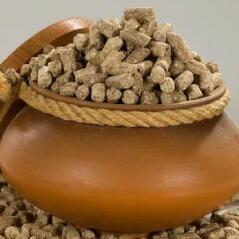
Recently, the starter feed under the name "nut-shaped calf starter" has been put on the market, which has been greatly welcomed by livestock farmers. Good taste, high digestibility, no reports of metabolic side effects
and digestion, increasing the growth rate of the calf and shortening the period of infancy are acceptable advantages of this emerging starter. These starters are produced with two levels of protein and energy.
- With 17.3% crude protein based on 100% dry matter and metabolizable energy (ME) equivalent to 2.67 mega calories
per kilogram, with the latest price of 9800 rials per kilogram.
- With 20.3% raw protein and ME energy equal to 2.75 mega calories per kilogram, with the latest price of 12,000 rials per kilogram.
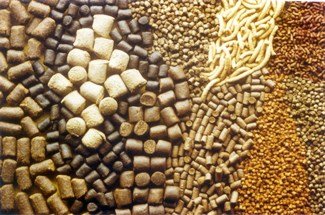
The main part of the aforementioned starter consists of oat flakes, corn flakes, dry date chips (date chips) and pellet seeds.
It is crushed with dye. The pellets contain protein supplements such as soybean meal, and the energy balance of this feed is provided by dates. This formula can be improved by adding full-fat soybeans.
(full fat soya) should be produced in the form of pellets instead of soybean meal. In that case, a major part of the energy supply is due to omega-6 and omega-3 fatty acids contained in soybeans, while the heat and pressure inside the extruder
During processing, it will neutralize the anti-nutritional agent of soybeans (antitrypsin). We strongly recommend the production of nut-shaped starter for dairy calves with the addition of a full-fat soybean extruder system.
References:
1. John K.Matsushima . 2000 History of Feed Processing
2. Colorado State University, Fort Collins.
3. S.L Boyles, V.L Andeson 1989 , Feeding Barley to Cattle
4. Ohio State University Extension.
5. Judson Vasconcelos . Former Assistant Professor, Feed lot Specialist
6. Profit Tip : Grain Processing. University of Nebraska, Panhandle Research and Extension ,Scottsbluff,NE.
7. RA Zinn 1990 . Influence of flake density on the comparative feeding value of steam – flaked corn for feedlot cattle Anim Sci Pept.,
8. University of California , Copyright 1990 by American Society of Animal Science.
9. C.Brent Theurer. 1986 Grain Processing on Starch Utilization by Ruminants Journal of Animal Science 1986,63:1649 – 1662.
10. RA Zinn. FN owens. RA ware. 2002 availability and performance of feedlot cattle, Flaking corn: processing mechanics. quality standards, and impact on energy.
Journal & Animal Science 2002,80: 1145 – 1156.
All rights of this site reserved by Pars Binalood Commercial Production Group.